
Last updated October 15, 2026
Free written scope consultation - allowances, timeline, and change-order rules on paper before a single trade is scheduled
Construction Cost Breakdown: The Jacksonville Homeowner’s Reference for 2026
Most Jacksonville homeowners walk into a remodel expecting the big numbers: cabinets, tile, countertops. What catches them off guard is the line item they never saw coming. In 2026, the widest range in any Jacksonville remodel quote isn’t labor or materials. It’s the contingency line, which careful contractors show explicitly and less careful ones hide inside the total, leaving a family to discover mid-project that the “price” was never actually fixed. This guide walks through the real line items for five common Jacksonville projects, why certain costs run higher here than national averages, and where a smart homeowner can actually negotiate without sacrificing quality. You’ll leave with the numbers, the local cost drivers, and a clearer sense of what belongs in a written contract.
Quick Answer
Construction costs in Jacksonville for 2026 run roughly $95 to $280 per square foot depending on project type, with kitchens and primary baths landing between $150 and $275 per square foot, room additions between $185 and $320, whole-home renovations between $95 and $190, and ADUs between $180 and $310 per square foot. Labor, materials, permits, and a realistic contingency of 8 to 15 percent make up the four buckets every homeowner should see itemized before signing anything. A written fixed-price contract is the strongest protection against the cost creep that plagues Northeast Florida remodels right now.
Styles & brands we work with







Table of Contents
- Per-Square-Foot Cost Ranges for Five Common Jacksonville Projects
- Why Jacksonville Labor Costs Run Higher Than National Averages
- Material Lines Where Named Brands and Commodity Products Split Wide
- What the Duval County Permit Fee Schedule Adds to Your Budget
- Fixed-Price vs. Cost-Plus Contracts: What Each Structure Actually Means
- The Contingency Line: What It Is and What’s Reasonable in Jacksonville
- How a Jacksonville Remodel Budget Comes Together, Step by Step
- Common Mistakes to Avoid
- When to Call a Professional
- Frequently Asked Questions
Per-Square-Foot Cost Ranges for Five Common Jacksonville Projects
Every project in Jacksonville carries a different cost structure because each one pulls differently on labor, materials, and permitting. Here are the realistic ranges we work with for 2026, broken into the four buckets that matter: labor, materials, permit fees, and contingency. These reflect current Northeast Florida pricing, not national averages, and they assume a licensed Jacksonville contractor pulling permits properly.
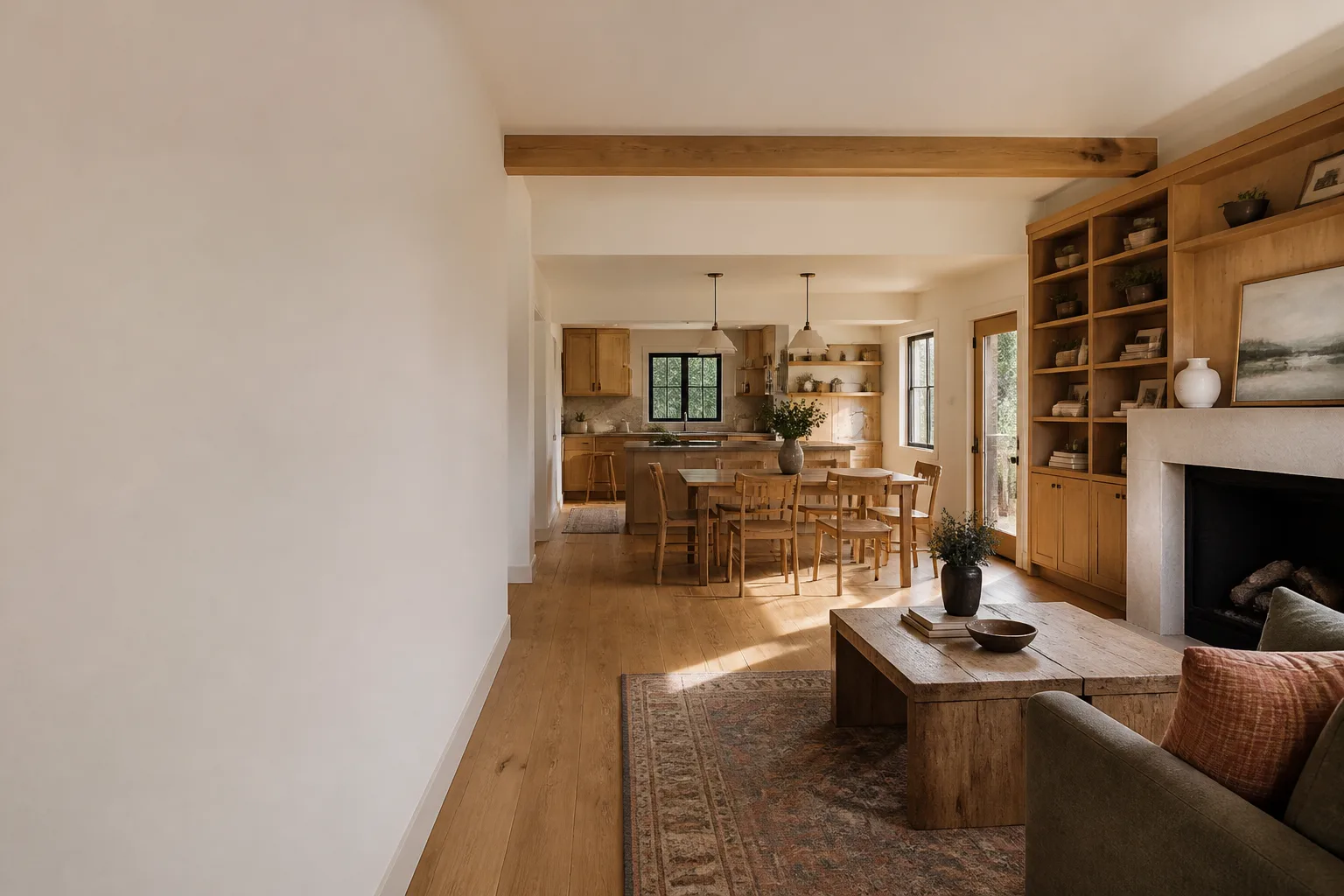
Kitchen Remodel: $150 – $275 per square foot
A 200-square-foot Jacksonville kitchen typically lands between $30,000 and $55,000. Labor runs 35 to 45 percent of the total, with cabinet installation, countertop fabrication, and electrical rough-in as the three biggest labor draws. Materials run 40 to 50 percent, dominated by cabinetry, countertops, and flooring. Permits usually add $800 to $1,600 depending on scope. Contingency sits at 10 to 12 percent. In neighborhoods like San Marco and Avondale, where homes date to the 1920s and 1930s, electrical and plumbing surprises push contingency toward the higher end.
Primary Bath Remodel: $160 – $280 per square foot
A typical 80-square-foot primary bath runs $13,000 to $22,500 in Jacksonville. Labor claims 40 to 50 percent because waterproofing, tile setting, and plumbing rerouting are slow, detail-heavy trades. Materials run 35 to 45 percent, with tile, shower glass, and fixtures as the main lines. Permit fees range from $500 to $1,200. Contingency should sit at 10 to 15 percent, especially in older Riverside and Springfield homes where cast-iron drain lines and original subfloors hide beneath the surface.
Room Addition: $185 – $320 per square foot
A 300-square-foot addition in Jacksonville runs $55,000 to $96,000. Labor takes 40 to 50 percent, driven by foundation work, framing, roofing, and the electrical and HVAC tie-ins. Materials run 35 to 45 percent. Permits and impact fees are the wild card here: depending on the addition’s square footage and your property’s location, Duval County impact fees for new conditioned square footage can add $1,500 to $4,000 or more on top of standard permit and inspection fees. Contingency belongs at 12 to 15 percent.
Whole-Home Renovation: $95 – $190 per square foot
A full renovation of a 2,000-square-foot Jacksonville home runs $190,000 to $380,000, though the range stretches wider when structural work, foundation repair, or full re-plumbing enters the picture. Labor runs 40 to 50 percent, materials 35 to 45 percent, permits $2,000 to $6,000 depending on the number of systems touched, and contingency 10 to 12 percent. Homes in Arlington and the Beaches areas built before the 1990s often carry hidden costs in outdated electrical panels and single-pane windows that drive the total toward the top of the range.
ADU (Accessory Dwelling Unit): $180 – $310 per square foot
A 500-square-foot detached ADU in Jacksonville typically runs $90,000 to $155,000. Labor claims 45 to 55 percent because the project is essentially a small house: foundation, framing, roofing, plumbing, electrical, HVAC, and finishes packed into a compact footprint. Site work and utility connections add $8,000 to $20,000 that many homeowners forget to include. Permits and impact fees run $2,500 to $6,500. Contingency belongs at 12 to 15 percent. Jacksonville’s zoning rules for ADUs changed in recent years, and lot size, setback, and owner-occupancy requirements vary by neighborhood, so checking current code before budgeting is essential.
These ranges assume named-brand materials where they matter most: cabinets from manufacturers like KraftMaid or Wellborn, countertops from Cambria or Silestone, and fixtures from Kohler or Moen. Commodity substitutions can shave 10 to 15 percent off materials, but the tradeoff shows up in longevity and warranty coverage. We’ll get into that in the materials section below.
Why Jacksonville Labor Costs Run Higher Than National Averages
Jacksonville’s labor market for skilled trades has been tight for years, and 2026 hasn’t loosened it. The city’s sustained population growth, driven by families relocating from higher-cost markets, keeps demand for remodels high. Meanwhile, the pipeline of new electricians, plumbers, and tile setters hasn’t kept pace with retirements. The result: Jacksonville labor rates for finish trades run 12 to 20 percent above national averages, and the gap widens during peak season from March through October.
Three trade categories show the most scheduling-driven price variance in Jacksonville right now:
- Tile work: A skilled tile setter in Jacksonville charges $55 to $95 per hour, and good ones book out 4 to 8 weeks in advance. Large-format tile, which requires more prep and precision, pushes toward the top of that range. Shower waterproofing, when done to manufacturer spec with systems like Schluter, adds material and labor cost but eliminates the most common source of post-remodel water damage.
- Cabinetry installation: Pre-fabricated cabinet lines install faster, but custom or semi-custom cabinetry from manufacturers like KraftMaid and Wellborn requires a finish carpenter who can scribe, shim, and adjust doors properly. Expect $45 to $85 per hour for a qualified cabinet installer in Jacksonville, and don’t assume the lowest bidder is doing the same level of work.
- Electrical rough-in: Jacksonville’s electrical code requires dedicated circuits for most major appliances, GFCI protection in wet areas, and AFCI protection in living spaces. A licensed Jacksonville electrician charges $75 to $120 per hour. Work that requires panel upgrades or service changes, common in older homes, adds $2,500 to $6,000 on its own.
One factor specific to Jacksonville: the post-storm demand cycle. After hurricane-related roofing and water damage events, the same crews who frame additions and run electrical also get pulled into repair work. That compression pushes labor rates up temporarily, and homeowners with flexible timelines can sometimes schedule around those spikes.
What does all of this mean for budgeting? Assume labor will be the largest or second-largest line item on any Jacksonville remodel, and don’t treat it as negotiable in the same way materials can be. A contractor who quotes significantly under the ranges above is either cutting corners on licensing and insurance, or planning to make up the difference in change orders once the job is underway. The written price, given before any work starts, is the filter that separates the two.
Material Lines Where Named Brands and Commodity Products Split Wide
Not all material categories are worth spending up on. But in Jacksonville’s climate, three product lines have a wider cost spread between named brands and commodity substitutes than most homeowners realize, and the divergence matters more here than in drier or milder markets.
Windows: Impact vs. Non-Impact
Jacksonville sits in a high-wind zone, and Florida building code requires impact-resistant windows or shutters in new construction and many renovation projects. Impact-rated windows from a manufacturer like PGT or Andersen run $900 to $1,800 per opening installed, while non-impact windows of similar size run $400 to $900. That’s a significant spread, but it’s not a place to cut corners. The impact rating is a code compliance issue and an insurance issue, and insurers across Duval County routinely discount premiums for homes with verified impact protection. If you’re remodeling an older Jacksonville home with single-pane windows, upgrading to impact-rated windows is one of the few material decisions that pays back through both insurance savings and resale value.
Roofing Underlayment
The difference between basic felt underlayment and a high-performance synthetic or peel-and-stick underlayment runs $25 to $75 per square (100 square feet). In Jacksonville’s humidity and rainfall, the synthetic underlayment resists moisture better and holds up longer, especially on low-slope sections of roof. GAF is the brand we use most often because its warranty travels with the finished roof and is documented in writing. This is a modest cost upgrade that protects everything below it.
Exterior Trim Material
PVC and composite trim boards from manufacturers like James Hardie run 2 to 3 times the cost of basic pine or finger-jointed trim, but they don’t rot, don’t wick moisture, and don’t require the same repainting cycle. In Jacksonville’s heat and humidity, wood trim on an exterior that isn’t perfectly sealed will show rot within 5 to 8 years. Hardie trim, properly installed, lasts the life of the siding. The upfront difference of $1,500 to $4,000 on an average home is cheaper than replacing rotted trim once.
For hardscape projects, the same logic applies. Pavers from Belgard and Techo-Bloc run higher than generic big-box pavers, but they hold color longer, resist efflorescence better, and carry manufacturer warranties that are actually enforceable. If the patio or walkway is part of the project, spec the brand by name in the written contract so there’s no substitution question later.
What the Duval County Permit Fee Schedule Adds to Your Budget
Permit costs in Jacksonville are not a rounding error, and homeowners who don’t plan for them get surprised twice: once when the fee shows up on the invoice, and again if the work is done without a permit and becomes a problem at resale or insurance renewal. Duval County’s Building Inspection Division handles permits for most of Jacksonville, including the Beaches communities, and the fee schedule is based on project valuation.
Here’s what actually gets added to a typical Jacksonville remodel budget:
- Plan review fee: For projects that require plan review, which includes most additions, ADUs, and structural changes, Duval County charges a plan review fee based on the project’s valuation. For a $100,000 addition, expect $300 to $800 just for plan review.
- Building permit fee: The base permit fee for residential work typically runs $500 to $2,500 depending on valuation and scope. A kitchen remodel with electrical and plumbing changes usually lands between $800 and $1,600.
- Trade permit fees: Electrical, plumbing, and mechanical permits are separate line items. Each trade permit typically runs $150 to $500. A full kitchen remodel commonly carries three trade permits, adding $450 to $1,500.
- Inspection fees: Duval County charges per inspection. A typical addition passes 10 to 15 inspections between foundation, framing, rough-in, insulation, and final. At $50 to $150 per inspection, that’s $500 to $2,250.
- Impact fees for additions: Jacksonville assesses mobility and parks impact fees on new conditioned square footage. The exact amount depends on location within Duval County and the addition’s size, but a 300-square-foot addition commonly carries $1,500 to $3,500 in impact fees. ADUs carry their own impact fee schedule.
The total permit package on a typical Jacksonville kitchen remodel runs $1,500 to $3,500. On a room addition, it runs $4,000 to $9,000. On a whole-home renovation with multiple system changes, it can run $6,000 to $12,000. A legitimate contractor includes these as line items in the written price. A contractor who says “we’ll handle permits later” is creating a future change order or, worse, doing unpermitted work that will surface at inspection time when you sell.
One more thing worth knowing: the General Contractor in Jacksonville who pulls the permit is the one legally responsible for the work passing inspection. That’s a protection for you, and it’s one reason to be cautious about hiring subcontractors directly without a GC running the project.
Fixed-Price vs. Cost-Plus Contracts: What Each Structure Actually Means
Most homeowners hear “fixed-price” and “cost-plus” and assume cost-plus is simply more honest because it shows actual costs. In practice, the two structures create completely different incentives, and only one of them puts the risk of cost overruns on the contractor instead of the homeowner.
Fixed-Price Contract
A fixed-price contract means the contractor specifies the scope, the materials, and the price in writing before any work begins. The price doesn’t change unless the homeowner changes the scope. If material costs rise mid-project, the contractor eats the difference. If the crew finds a surprise behind the drywall, the surprise becomes a change order only if the homeowner approves it in writing. This is the structure Elmstead Remodeling Jacksonville uses on every project, because it forces the contractor to think through the job before starting, not during it. The written price includes the contingency the contractor considers appropriate, which is why the contingency percentage matters so much.
Cost-Plus Contract
In a cost-plus contract, the homeowner pays actual material and labor costs plus a markup, typically 15 to 25 percent. There’s no fixed ceiling, and the incentive structure rewards the contractor for spending more, not less. Cost-plus can make sense for projects where the scope genuinely can’t be defined upfront: major structural repairs where the full extent of damage is unknown until walls are opened, or historic renovation work in neighborhoods like Riverside where hidden conditions are common. But for a kitchen remodel, a bath remodel, or an addition with a defined scope, a homeowner accepting cost-plus is accepting open-ended pricing.
Which Structure Fits Which Jacksonville Project
- Kitchen remodel: Fixed-price, every time. The scope is definable. If a contractor won’t give a written fixed price for a kitchen, that’s an answer, not a negotiation.
- Bathroom remodel: Fixed-price, with an explicit contingency line item for waterproofing repairs discovered during demo. Bathroom Remodeling in Jacksonville projects in older homes need that buffer.
- Room addition: Fixed-price for the structure itself, with a written allowance for site conditions like unexpected fill or root systems.
- Whole-home renovation: Can work as fixed-price when the scope is fully specified. For older Jacksonville homes with unknown conditions, a hybrid approach with fixed price for defined work and a capped allowance for hidden repairs is reasonable.
- Structural repair or water damage remediation: Cost-plus or time-and-materials is defensible when the full scope genuinely can’t be known until demolition happens.
Whatever structure you choose, the contract should name the specific materials by brand and model. “Kitchen cabinets” is not a specification. “KraftMaid cabinets in the Durham door style, painted finish, soft-close hinges” is a specification, and it’s the difference between getting what you paid for and getting whatever the supplier had in stock.
The Contingency Line: What It Is and What’s Reasonable in Jacksonville
The contingency is the line item honest contractors show and others hide. It exists because no contractor, however experienced, can see behind every wall before demolition. The contingency is a pre-agreed amount set aside for the unknowns: the rotted subfloor under the old tile, the cast-iron drain line that collapsed when the new plumbing tied in, the electrical panel that’s out of code and needs replacement before the new circuits pass inspection.
Here’s what’s reasonable in Jacksonville for 2026:
- Kitchen remodel: 10 to 12 percent. Older homes in San Marco, Riverside, and Avondale sit at the top of that range.
- Primary bath remodel: 10 to 15 percent. Water damage behind old tile and tub surrounds is the most common surprise.
- Room addition: 12 to 15 percent. Site conditions, foundation surprises, and utility tie-ins are the variance drivers.
- Whole-home renovation: 10 to 12 percent, but with a written allowance for system repairs discovered during demo.
- ADU: 12 to 15 percent. Utility trenching and site grading are the usual unknowns.
The key protection is what happens to unspent contingency. In a well-written fixed-price contract, unspent contingency either stays with the contractor as part of the fixed price or is credited back to the homeowner, depending on how the contract is structured. That should be in writing. If the contingency line isn’t shown at all, it’s not because the contractor doesn’t carry one. It’s because it’s buried inside the total, which means you’re paying for it either way without knowing how much it is or what happens to it.
One question homeowners should ask before signing: “If the contingency isn’t fully spent, what happens to the remainder?” The answer tells you a lot about the contractor’s approach to pricing transparency.
How a Jacksonville Remodel Budget Comes Together, Step by Step
A construction budget is not a single number. It’s the result of a sequence of decisions, and skipping steps is how homeowners end up with a number that bears no relation to the final invoice. Here’s the order we recommend to every Jacksonville homeowner, whether you’re remodeling a kitchen in Mandarin or adding a bedroom in Murray Hill:
- Define the scope in writing first. A one-page scope document that names every room touched, every material category, and every fixture or finish category. “Remodel kitchen” is not a scope. “Full kitchen remodel: remove existing cabinets, countertops, backsplash, and flooring; install new cabinets, quartz countertops, tile backsplash, LVP flooring, new sink and faucet, new lighting” is a scope.
- Set a budget range, not a target. The low end is what you want to spend. The high end is what the same project costs with mid-grade named-brand materials and the contingency fully spent. If the range is $40,000 to $55,000, you’re budgeting correctly. If you can only afford $40,000 and the range is $40,000 to $55,000, you’re under-budgeting.
- Get the permit fee estimate early. Duval County’s fee schedule is public. A contractor should be able to estimate permits within a few hundred dollars before you sign anything. If they can’t, they haven’t done enough of this work in Jacksonville.
- Compare written prices, not verbal estimates. A verbal estimate is a conversation. A written price is a commitment. Any contractor in Jacksonville who won’t put a price in writing before starting should be crossed off the list.
- Confirm the contingency structure. What percentage, what it covers, and what happens to unspent funds. If the contractor hedges on any of these three, the contingency isn’t really a contingency.
- Lock the material specifications. Brand, model, finish, and quantity for every major material. If the contract says “quartz countertops,” ask it be changed to “Cambria quartz, [color name] finish, [thickness] thickness.”
- Review the payment schedule. The payment milestones should track visible progress, not time elapsed. A reasonable structure for a Jacksonville remodel is a small deposit, then payments tied to inspection milestones: demo complete, rough-in passed, drywall hung, trim installed, final passed.
This sequence works whether you’re planning a Kitchen Remodeling in Jacksonville project or a full gut renovation. The order matters. Define first, price second, sign third.
Common Mistakes to Avoid
- Comparing quotes without comparing scopes. A $42,000 kitchen quote and a $58,000 kitchen quote in Jacksonville are not two prices for the same job. They’re usually two different jobs. The lower quote is missing something: a permit, a licensed electrician, a waterproofing system, a contingency line. Line up the scopes side by side before comparing prices.
- Assuming the lowest bid is the honest bid. Jacksonville’s market is full of unlicensed operators who undercut legitimate contractors and then disappear when the work fails inspection or leaks. The lowest bid usually isn’t the best deal. It’s the bid that hasn’t priced in the work it actually takes to do the job right.
- Budgeting for materials but not for what’s behind the walls. In Jacksonville homes built before the 1990s, the materials you can see are usually fine. It’s the electrical panels, drain lines, and subfloors behind the walls that drive costs up. If the house is older, add 5 percent to the contingency before you start.
- Improving without checking the impact on insurance. In Duval County, a major renovation can change your insurance risk profile: impact windows lower it, older electrical panels raise it, an addition changes it. Check with your insurer before the project starts, not after the final inspection.
- Accepting a contract that changes price after the first week. A fixed-price contract protects you. A cost-plus contract exposes you. If the scope is definable, the price should be fixed. If you’re getting nervous about what’s written, you’re not being difficult, you’re being careful.
- Choosing products by price instead of by warranty. Named brands cost more for a reason: the warranty is real, the manufacturer is reachable, and the product is spec’d consistently. Commodity products from no-name suppliers are cheaper because nobody is backing them. In Jacksonville’s humidity, that difference shows up faster than in most markets.
- Letting the project start without a written scope and price. A handshake and a verbal number is how a $45,000 project becomes a $65,000 project. The written price before any work starts is not a nice-to-have, it’s the only way a homeowner knows what they’re actually committing to.
When to Call a Professional
Some projects are worth a DIY attempt, and some aren’t. Any job that involves moving plumbing, adding electrical circuits, changing structure, or waterproofing a wet area belongs in the second category, not because a homeowner can’t learn to do the work, but because the failure cost of getting it wrong is so much higher than the money saved. A shower that leaks into the subfloor for two years before anyone notices is a $15,000 repair hidden inside a $1,500 “savings.”
If your project involves any of these, bring in a licensed Jacksonville contractor: structural changes, plumbing rerouting, electrical panel work, new window or door openings, waterproofing, or anything requiring a Duval County permit. Gable roof repairs where steep-pitch and height are involved should always go to a trained professional, and garage door spring replacement is dangerous enough that the hardware is under tension and should be left to someone with the right tools and training. Elmstead Remodeling Jacksonville offers free estimates in Jacksonville. Call (904) 643-6243 to schedule yours.
Frequently Asked Questions
A Jacksonville kitchen remodel in 2026 typically runs $150 to $275 per square foot, which puts a 200-square-foot kitchen between $30,000 and $55,000. The range depends on cabinet quality, countertop choice, and how much electrical and plumbing work the existing kitchen needs. For an exact quote on your kitchen, call (904) 643-6243. Estimates are free and written before any work starts.
A realistic contingency for a Jacksonville remodel is 10 to 15 percent of the total project cost, depending on the project type and the home’s age. Kitchens and baths in older homes sit at the top of that range because hidden water damage and outdated plumbing are common. The contingency should be a visible line item in the written contract, and the contract should state what happens to any unspent portion.
Duval County permit fees typically add $1,500 to $3,500 to a kitchen or bath remodel, $4,000 to $9,000 to a room addition, and $6,000 to $12,000 to a whole-home renovation. These totals include plan review, the building permit, trade permits for electrical and plumbing, inspection fees, and impact fees for projects that add conditioned square footage.
For most Jacksonville remodels with a defined scope, a fixed-price contract is better for the homeowner because it caps the cost and puts the risk of material price increases and minor surprises on the contractor. Cost-plus makes sense only when the scope genuinely can’t be known in advance, like structural repair or water damage remediation. If a contractor won’t provide a written fixed price for a kitchen or bath remodel, that’s a signal to look elsewhere.
Jacksonville’s skilled labor costs run 12 to 20 percent above national averages because the city’s population growth keeps demand high while the supply of licensed electricians, plumbers, and tile setters stays tight. The gap widens from March through October and again after storm events, when repair work competes with remodel projects for the same crews.
Yes, if your home has single-pane or non-impact windows, upgrading during a remodel is worth the cost. Impact-rated windows run $900 to $1,800 per opening installed versus $400 to $900 for non-impact, but they meet Florida building code requirements in high-wind zones, reduce insurance premiums across Duval County, and hold resale value. It’s one of the few material upgrades that pays back through insurance savings.
The Bottom Line
Jacksonville construction costs in 2026 sit higher than national averages because of local labor scarcity, climate-driven material demands, and permit and impact fee structures that add real money to every project. The homeowner who budgets correctly knows the four buckets. Labor, materials, permits, and contingency, and knows which ones have give. The written fixed price, given before work starts, is the single strongest protection against cost creep, and the contingency line, shown explicitly with a clear plan for unspent funds, separates contractors who price honestly from those who don’t. If you’re planning a remodel in Jacksonville, start with the scope in writing, get the permit estimate early, and don’t accept a contract that changes price after the first week. For more guides & resources, visit our blog.
Written by Graham Stein, Owner at Elmstead Remodeling Jacksonville, serving Jacksonville since 2005.
See the difference
 Before
 After
After Before
 After
After Before
 After
After

